
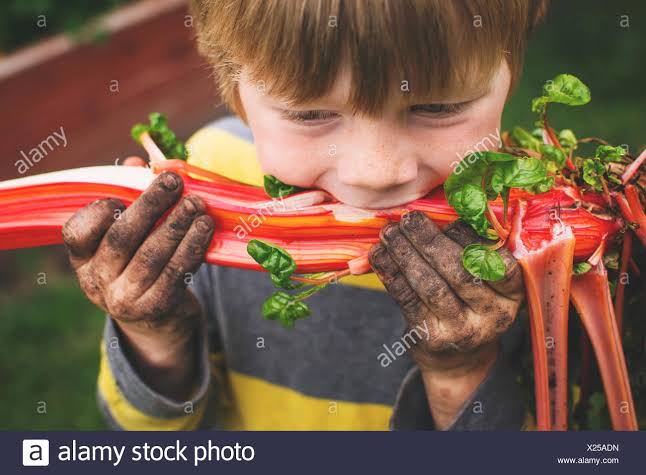
A new study suggests that early exposure to germs strengthens the immune system. That means letting children get a little dirty might be good for their health later in life.
Eating without washing your hands is not bad it will stimulate your immune system to became stronger:
The Bible states that Jesus disciples they don’t wash their hands before they eat some people say that is un hygienic behaviour :
In Matthew 15:2 “Why do your disciples break the tradition of the elders? They don’t wash their hands before they eat!”
But according to Dr. Jack Gilbert, the director of the Microbiome Center at the University of Chicago Medicine and co-author of Dirt Is Good:
The Advantage Of Germs For Your Child’s Developing Immune System, speaks for the microbes. Gilbert has spent his professional life — and much of his personal life, first in the garden of his childhood home in London and now just outside of Chicago — rooting around in the muck. This has been, his research shows, salutary. “My mother always said, keep the house ‘clean enough to be healthy, dirty enough to be happy,’” Gilbert told Fatherly. “I like to turn that on its head a little bit and say ‘Dirty enough to be healthy, clean enough to be happy.’”
“When I started to do research in asthma, allergies and then neurocognitive disorders, it became obvious that making sure that you have a robust and healthy microbiome,” said Gilbert, “also made sure you had a robust and healthy immune system.” This has real-world (and wonderful) implications for fathers. “Kids should be interacting with the world and being part of it rather than locked up inside the house.” Pacifiers will fall, dogs will come and go, dirt will cake upon the flesh of our children and this is all, scientifically, good. In that sense, Gilbert speaks not only for the microbes, but for the dirty happy children, who are doing just fine.
The study involved laboratory mice. It found that adult mice raised in a germ-free environment were more likely to develop allergies, asthma and other autoimmune disorders. There are more than eighty disorders where cells that normally defend the body instead attack tissues and organs.
They include rheumatoid arthritis, which attacks the joints; Crohn’s disease, an inflammatory bowel condition; and juvenile diabetes. Hay fever, a common allergy, is also an autoimmune disorder.
Richard Blumberg is a professor at Harvard Medical School in Boston, Massachusetts. He says in nineteen eighty-nine, medical researchers sought to explain these diseases with what they called the “hygiene hypothesis.” They proposed that the increasing use of antibacterial soaps and other products, especially early in life, could weaken immune systems.
Dr.RICHARD BLUMBERG: “The hypothesis has stated or suggested that early-life exposure to microbes is a very important determinant of later life sensitivity to allergic and so-called autoimmune diseases, such as hay fever, asthma, inflammatory bowel disease and others.”
Now, Dr. Blumberg and a team have what they say is the first biological evidence to link early exposure to germs to stronger adult immune systems. They say this exposure could prevent the development of some autoimmune diseases.
Getting your hands dirty can give your health a real boostbThe bacteria in soil improves mood, mental agility and can also boost your immune system – so it’s time to get mucky!
Scientists set up an experiment whereby mice were put in a beaker of water and watched to see how long they would keep swimming and looking for an exit before giving up. The mice that were treated with the bacteria kept swimming for longer than the control mice, leading the scientists to conclude that they had a more active “coping mechanism”. Leaving aside the all-round oddness of the experiment, you have to admit that’s pretty interesting.
A related study by the Sage Colleges in New York found that soil bacteria can also accelerate learning. More long-suffering mice were fed myco-bacterium vaccae and were subseq-uently able to navigate a maze twice as fast as the control mice. In yet another study, scientists found that human cancer patients who were injected with mycobacterium vaccae reported better quality of life and less nausea and pain. It’s no wonder GIYers are such a happy bunch – it turns out we’re all jacked up on mycobacterium vaccae!
So, how does it work? The researchers believe that the key to it is the ‘happy chemical’ serotonin, which is produced in the brain and acts as a natural anti-depressant. The mycobacterium vaccae bacteria cause an immune system response in the body, causing serotonin-releasing neurons to fire in the pre-frontal cortex of the brain – the part of our brain known to be involved in mood regulation. It is these same nerves that are targeted by the anti-depressants such as Prozac.
The benefits of regular contact with soil extend beyond mood improvement and mental agility – it can also improve our immune system function. In 2012, researchers at Harvard Medical School published a study showing the health benefits of contact with dirt. They studied two groups of mice – one that had been exposed to microbes and one that had been raised in germ-free environments – they found that the group with early-life microbe exposure had significantly lower numbers of inflammatory immune cells in the lungs and colon, giving them a better chance at avoiding asthma and inflammatory bowel diseases later in life.
We live in a ‘germaphobic’ society where everything is kept spotlessly clean and germs are considered the enemy. We use antibacterial soaps each time we wash our hands and blitz surfaces with antibacterial wipes. Vegetables are cleaned before being put on the supermarket shelves, in case we might consider them too dirty to buy. Sit through the standard ad break when you’re watching television and you quickly arrive at the conclusion that all dirt is bad, and bacteria and germs should be obliterated with the strongest chemicals you can find. Undoubtedly, improved hygiene has reduced disease in the last century, but have we gone too far?
The ‘hygiene hypothesis’ posits that routine exposure to harmless microorganisms in the environment is actually good for us, boosting our immune systems by training it to ignore harmless molecules. People that do occasional ‘immunological exercise’ like this, get less asthma, fewer allergies, less skin irritations and so on.
 THE SCIENCE OF THE BIBLE