
In this study, a functional magnetic resonance imaging paradigm originally employed by Takahashi et al. was adapted to look for emotion-specific differences in functional brain activity within a healthy German sample (N = 14), using shame- and guilt-related stimuli and neutral stimuli. Activations were found for both of these emotions in the temporal lobe (shame condition: anterior cingulate cortex, parahippocampal gyrus; guilt condition: fusiform gyrus, middle temporal gyrus). Specific activations were found for shame in the frontal lobe (medial and inferior frontal gyrus), and for guilt in the amygdala and insula. This is consistent with Takahashi et al.’s results obtained for a Japanese sample (using Japanese stimuli), which showed activations in the fusiform gyrus, hippocampus, middle occipital gyrus and parahippocampal gyrus. During the imagination of shame, frontal and temporal areas (e.g. middle frontal gyrus and parahippocampal gyrus) were responsive regardless of gender. In the guilt condition, women only activate temporal regions, whereas men showed additional frontal and occipital activation as well as a responsive amygdala. The results suggest that shame and guilt share some neural networks, as well as having individual areas of activation. It can be concluded that frontal, temporal and limbic areas play a prominent role in the generation of moral feelings.
The cerebral cortex (plural cortices), also known as the cerebral mantle, is the outer layer of neural tissue of the cerebrum of the brain in humans and other mammals. It is separated into two cortices, by the longitudinal fissure that divides the cerebrum into the left and right cerebral hemispheres. The two hemispheres are joined beneath the cortex by the corpus callosum. The cerebral cortex is the largest site of neural integration in the central nervous system. It plays a key role in attention, perception, awareness, thought, memory, language, and consciousness.m
The Bible states in
Psalms 68:21
“But God will strike through the head of his enemies, the hairy scalp of such a one as still continues in his guiltiness.”
the hairy scalp continues in his guiltiness
Why did the Bible describe the hairy scalp of the head as being continues in his guiltness? Why didn’t the Bible say that the person was continues in his guiltnessl? What is the relationship between the hairy scalp of the head in guiltness ?
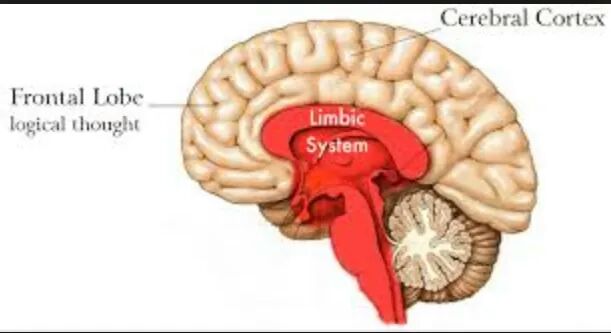
If we look into the skull at the hairy scalp of the head, we will find the prefrontal area of the cerebrum . What does physiology tell us about the function of this area? A book entitled Essentials of Anatomy & Physiology says about this area, “The motivation and the foresight to plan and initiate movements occur in the anterior portion of the frontal lobes, the prefrontal area. This is a region of association cortex…” Also the book says, “In relation to its involvement in motivation, the prefrontal area is also thought to be the functional center for aggression….”
So, this area of the cerebrum is responsible for planning, motivating, and initiating good and sinful behavior and is responsible for the telling of lies and the speaking of truth. Thus, it is proper to describe the hairy scalp of the head as guilltness and sinful when someone commits a sin, as the Bible has said, “…A hairy scalp continues in his guiltness )!”
Scientists have only discovered these functions of the prefrontal area in the last sixty years.
 THE SCIENCE OF THE BIBLE