The countless stars of skies

Have you ever looked up into the night sky and wondered just how many stars there are in space? This question has fascinated scientists as well as philosophers, musicians and dreamers throughout the ages.

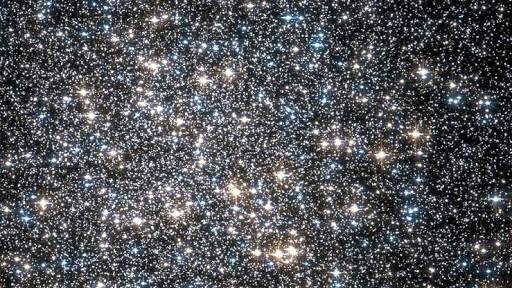
Look into the sky on a clear night, out of the glare of streetlights, and you will see a few thousand individual stars with your naked eyes. With even a modest amateur telescope, millions more will come into view.

So how many stars are there in the Universe? It is easy to ask this question, but difficult for scientists to give a fair answer!

Stars are not scattered randomly through space, they are gathered together into vast groups known as galaxies. The Sun belongs to a galaxy called the Milky Way. Astronomers estimate there are about 100 thousand million stars in the Milky Way alone. Outside that, there are millions upon millions of other galaxies also!

It has been said that counting the stars in the Universe is like trying to count the number of sand grains on a beach on Earth. We might do that by measuring the surface area of the beach, and determining the average depth of the sand layer.

If we count the number of grains in a small representative volume of sand, by multiplication we can estimate the number of grains on the whole beach.

The Bible states that the stars in the sky cannot be counted :

👉 In Jeremiah 33:22 “And as the stars of the sky cannot be counted and the sand on the seashore cannot be measured, so I will multiply the descendants of my servant David and the Levites who minister before me.”

Galaxy observations:

It’s easier to count stars when they are inside galaxies, since that’s where they tend to cluster. To even begin to estimate the number of stars, then you would need to estimate the number of galaxies and come up with some sort of an average.

Some estimates peg the Milky Way’s star mass as having 100 billion “solar masses,” or 100 billion times the mass of the sun. Averaging out the types of stars within our galaxy, this would produce an answer of about 100 billion stars in the galaxy. This is subject to change, however, depending on how many stars are bigger and smaller than our own sun. Also, other estimates say the Milky Way could have 200 billion stars or more.

The number of galaxies is an astonishing number, however, as shown by some imaging experiments performed by the Hubble Space Telescope. Several times over the years, the telescope has pointed a detector at a tiny spot in the sky to count galaxies, performing the work again after the telescope was upgraded by astronauts during the shuttle era.

A 1995 exposure of a small spot in Ursa Major revealed about 3,000 faint galaxies. In 2003-4, using upgraded instruments, scientists looked at a smaller spot in the constellation Fornax and found 10,000 galaxies. An even more detailed investigation in Fornax in 2012, with even better instruments, showed about 5,500 galaxies.

Kornreich used a very rough estimate of 10 trillion galaxies in the universe. Multiplying that by the Milky Way’s estimated 100 billion stars results in a large number indeed:1,000,000,000,000,000,000,000,000 stars, or a “1” with 24 zeros after it (1 septillion in the American numbering system; 1 quadrillion in the European system). Kornreich emphasized that number is likely a gross underestimation, as more detailed looks at the universe will show even more galaxies.

👉 In Job 9:7,9-10 “Which commandeth the sun, and it riseth not; and sealeth up the stars…”Which maketh Arcturus, Orion, and Pleiades, and the chambers of the south.Which doeth great things past finding out; yea, and wonders without number.
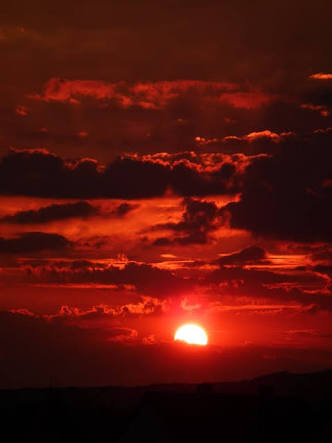
Our Amosphere in the skies acting like a prism

The most typical and easily observable phenomenon, of atmosphere acting like a prism, is the “mirage” our atmosphere serve as a mirror.

The Bible states that God spread out the skies as hard as a cast metal mirror because our atmosphere acting as crystal prism.

👉 In Job 37:18 “can you help God spread out the skies as hard as a cast metal mirror?

Another version:

Hast thou with him spread out the sky, which is strong, and as a molten looking glass?”

Sunlight reaches Earth’s atmosphere and is scattered in all directions by all the gases and particles in the air. Blue light is scattered more than the other colors because it travels as shorter, smaller waves. This is why we see a blue sky most of the time.

When the sun rises or sets, a green flash is nearly always lost to the naked eye. The distinctive coloration results from Earth’s atmosphere acting like a prism, splitting white sunlight into its spectrum of hues. Most of the time when the sun is near the horizon, only red and orange, longer-wavelength light makes it through to our eyes. Shorter wavelengths get refracted or bent out of sight. But for a brief moment, a band of green can make it through. In very rare cases, when atmospheric conditions are just right, a blue flash can be detected as well.

The light from the sun looks white. But it is really made up of all the colors of the rainbow.

When white light shines through a prism, the light is separated into all its colors. A prism is a specially shaped crystal.

If you visited The Land of the Magic Windows, you learned that the light you see is just one tiny bit of all the kinds of light energy beaming around the universe–and around you!

Like energy passing through the ocean, light energy travels in waves, too. Some light travels in short, “choppy” waves. Other light travels in long, lazy waves. Blue light waves are shorter than red light waves.

All light travels in a straight line unless something gets in the way and does one of these things:—

👉reflect it (like a mirror)

👉bend it (like a prism)

👉or scatter it (like molecules of the gases in the atmosphere)

Sunlight reaches Earth’s atmosphere and is scattered in all directions by all the gases and particles in the air. Blue light is scattered in all directions by the tiny molecules of air in Earth’s atmosphere. Blue is scattered more than other colors because it travels as shorter, smaller waves. This is why we see a blue sky most of the time.


👉 The Element found in the Earth Amosphere?

Earth’s atmosphere is a layer of gases surrounding the planet Earth and retained by the Earth’s gravity. It contains roughly 78% nitrogen and 21% oxygen 0.97% argon and carbon dioxide 0.04% trace amounts of other gases, and water vapor. This mixture of gases is commonly known as air.

👉 Argon :contains crystal structures.

👉 carbon : also contain crystal and metal structure, the crystal structure of the carbon called the crystalline carbon the diamond is made up of carbon.

Diamonds are made out of carbon. A chemically pure diamond is made up of carbon atoms which are bonded thorough strong covalent bonds.

diamond is regarded to be the hardest known material in the world.

👉 Nitrogen: also contain crystal structure if condenses (liquefies) at 77 K (−195.79 °C) and freezes at 63 K (−210.01 °C) into the beta hexagonal close-packed crystal allotropic form.

👉Oxygen:also contain crystal structure the solid oxygen are known to exist: β-phase: faint blue to pink — forms at 1 atm, below 43.8 K, rhombohedral crystal structure, (at room temperature and high pressure begins transformation to tetraoxygen). γ-phase: faint blue – forms at 1 atm, below 54.36 K, cubic crystal structure.

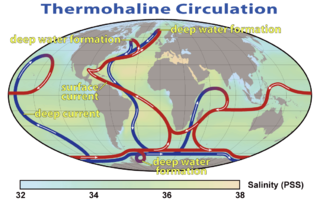
An Ocean current called the paths of seas

This is the Bible phrase that prompted the Father of Oceanography to begin a search for paths in the ocean.

King David of Israel wrote Psalm 8 by Yahuwah inspiration 3,000 years ago. Yet the “paths of the seas” he mentioned have only been known by modern peoples for two centuries.

The “paths of the seas” were discovered by Matthew Fontaine Maury (1806-1873), the Father of Oceanography.

Maury was a US naval officer whose attention was arrested by the phrase “paths of the seas” upon hearing Psalm 8 read aloud. He vowed to find these “paths of the seas.

👉 In Psalms 8:8 “The birds in the sky, and the fish in the sea, all that swim the paths of the seas.

An ocean current is any more or less permanent or continuous, directed movement of ocean water that flows in one of the Earth’s oceans.The currents are generated from the forces acting upon the water like the earth’s rotation, the wind, the temperature and salinity differences and the gravitation of the moon.

👉 In Psalms 77:19 “Your way was through the sea, your path through the great waters; yet your footprints were unseen.

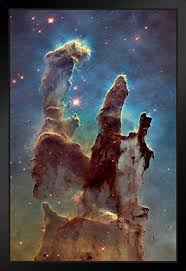
Pillars of Creation the pillars of heaven

What is the Pillars of heaven?

The Pillars of Creation is a photograph taken by the Hubble Space Telescope of elephant trunks of interstellar gas and dust in the Eagle Nebula, specifically the Serpens constellation, some 6,500–7,000 light years from Earth.

Before the discovery of Hubble space telescope the Bible states about the Pillars of heaven it say :

In Job 26:11 “The pillars of heaven tremble and are astounded at his rebuke.

Almost a thousand years before the discovery it is already revealed in the Bible.

These towering tendrils of cosmic dust and gas sit at the heart of M16, or the Eagle Nebula. The aptly named Pillars of Creation, featured in this stunning Hubble image, are part of an active star-forming region within the nebula and hide newborn stars in their wispy columns.

Although this is not Hubble’s first image of this iconic feature of the Eagle Nebula, it is the most detailed. The blue colors in the image represent oxygen, red is sulfur, and green represents both nitrogen and hydrogen. The pillars are bathed in the scorching ultraviolet light from a cluster of young stars located just outside the frame. The winds from these stars are slowly eroding the towers of gas and dust.

Stretching roughly 4 to 5 light-years, the Pillars of Creation are a fascinating but relatively small feature of the entire Eagle Nebula, which spans 70 by 55 light-years. The nebula, discovered in 1745 by the Swiss astronomer Jean-Philippe Loys de Chéseaux, is located 7,000 light-years from Earth in the constellation Serpens. With an apparent magnitude of 6, the Eagle Nebula can be spotted through a small telescope and is best viewed during July. A large telescope and optimal viewing conditions are necessary to resolve the Pillars of Creation.

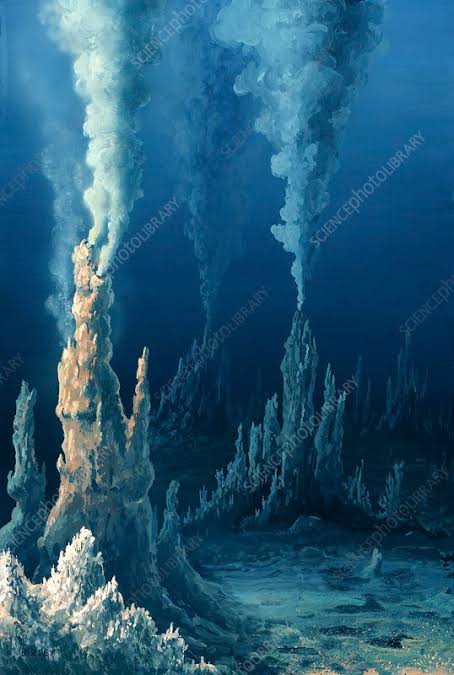
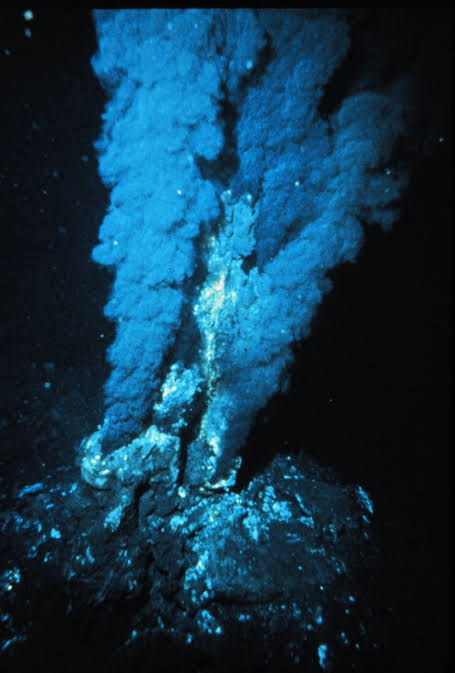
Hydrothermal vents the spring of the sea

Modern machines provide our generation with knowledge entirely unknown in yesteryear. Which of our great grandparents saw footage of water rising through hydrothermal vents on the deep sea floor? New research into water circulating from the ocean, into seafloor crustal rocks, and back into the ocean echoes one of the questions God asked Job thousands of years ago.

In Job 38:16 “Have you journeyed to the springs of the sea or walked in the recesses of the deep?

God was illustrating why Job should humble himself even amidst his extreme suffering. Job got the message.

Of course, Job never walked in search of the seafloor’s depths, let alone under the seafloor crust, to explore the springs of the sea. He probably didn’t even know about the springs.

Today’s scientists haven’t literally walked the paths these deep waters take either, but they do explore them with deep-sea submersibles and computer models.

In 2003 Professor of Earth and Planetary Sciences at the University of California Santa Cruz Andrew Fisher discovered that seawater sinks into the seafloor’s crust then rises through vents many miles away.In the report, he wrote, “Ever since we discovered a place where these processes occur, we have been trying to understand what drives the fluid flow, what it looks like, and what determines the flow direction.”

To find out what powers these water pumps, researchers created a 3-D virtual version of seafloor crust. They imbued their model with parameters that mimicked the physics of the Juan de Fuca Ridge in the Pacific Ocean. Their results, published in the journal Nature Communications, show how factors beneath the earth help determine where the water enters the crust and where the heated water springs back into the sea—such as the amount of rocky crustal material above the less permeable sediments, the permeability of the rocks at any given location, and the amount of heat from deep beneath the earth.

In Proverbs 8:24,28 “When there were no watery depths, I was given birth, when there were no springs overflowing with water;…”when he made firm the skies above, when he established the fountains of the deep,

When today’s scientists study the processes that power hydrothermal vents and learn about Job’s “springs of the sea,” they inadvertently confirm the accuracy and wisdom that flows throughout this most ancient book called the Bible.

Space garbage

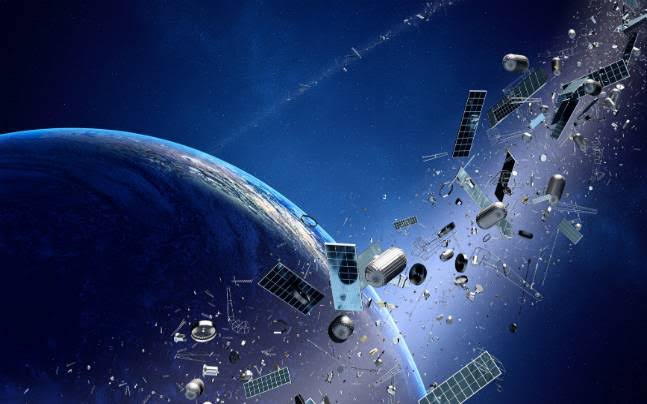
The Bible states that the heavens are not pure in God’s eyes? Why the heavens is not pure in God eyes because it is abundance of space waste or space garbage in sky !

In Job 15:15 “…And the heavens are not pure in his sight;”

Space waste or space garbage) from the mass of defunct, artificially created objects in space, especially Earth orbit. These include old satellites and spent rocket stages, as well as the fragments from their disintegration and collisions.

Initially, the term space debris referred to the natural debris found in the solar system: asteroids, comets, and meteoroids. However, with the 1979 beginning of the NASA Orbital Debris Program, the term also refers to the debris from the mass of defunct, artificially created objects in space, especially Earth orbit.
More than 500,000 pieces of debris, or “space junk,” are tracked as they orbit the Earth. They all travel at speeds up to 17,500 mph, fast enough for a relatively small piece of orbital debris to damage a satellite or a spacecraft.

The rising population of space debris increases the potential danger to all space vehicles, but especially to the International Space Station, space shuttles and other spacecraft with humans aboard.

NASA takes the threat of collisions with space debris seriously and has a long-standing set of guidelines on how to deal with each potential collision threat. These guidelines, part of a larger body of decision-making aids known as flight rules, specify when the expected proximity of a piece of debris increases the probability of a collision enough that evasive action or other precautions to ensure the safety of the crew are needed.

Orbital Debris:

Space debris encompasses both natural (meteoroid) and artificial (man-made) particles. Meteoroids are in orbit about the sun, while most artificial debris is in orbit about the Earth. Hence, the latter is more commonly referred to as orbital debris.

Orbital debris is any man-made object in orbit about the Earth which no longer serves a useful function. Such debris includes nonfunctional spacecraft, abandoned launch vehicle stages, mission-related debris and fragmentation debris.

There are more than 20,000 pieces of debris larger than a softball orbiting the Earth. They travel at speeds up to 17,500 mph, fast enough for a relatively small piece of orbital debris to damage a satellite or a spacecraft. There are 500,000 pieces of debris the size of a marble or larger. There are many millions of pieces of debris that are so small they can’t be tracked.

Even tiny paint flecks can damage a spacecraft when traveling at these velocities. In fact a number of space shuttle windows have been replaced because of damage caused by material that was analyzed and shown to be paint flecks.

“The greatest risk to space missions comes from non-trackable debris,” said Nicholas Johnson, NASA chief scientist for orbital debris.

With so much orbital debris, there have been surprisingly few disastrous collisions.

In 1996, a French satellite was hit and damaged by debris from a French rocket that had exploded a decade earlier.

On Feb. 10, 2009, a defunct Russian satellite collided with and destroyed a functioning U.S. Iridium commercial satellite. The collision added more than 2,000 pieces of trackable debris to the inventory of space junk.

China’s 2007 anti-satellite test, which used a missile to destroy an old weather satellite, added more than 3,000 pieces to the debris problem.

Tracking Debris:

The Department of Defense maintains a highly accurate satellite catalog on objects in Earth orbit that are larger than a softball.

NASA and the DoD cooperate and share responsibilities for characterizing the satellite (including orbital debris) environment. DoD’s Space Surveillance Network tracks discrete objects as small as 2 inches (5 centimeters) in diameter in low Earth orbit and about 1 yard (1 meter) in geosynchronous orbit. Currently, about 15,000 officially cataloged objects are still in orbit. The total number of tracked objects exceeds 21,000. Using special ground-based sensors and inspections of returned satellite surfaces, NASA statistically determines the extent of the population for objects less than 4 inches (10 centimeters) in diameter.

Collision risks are divided into three categories depending upon size of threat. For objects 4 inches (10 centimeters) and larger, conjunction assessments and collision avoidance maneuvers are effective in countering objects which can be tracked by the Space Surveillance Network. Objects smaller than this usually are too small to track and too large to shield against. Debris shields can be effective in withstanding impacts of particles smaller than half an inch (1 centimeter).

Sunspots and Starspots

The Bible states that the stars are not pure in God’s eyes our SUN in solar system is belong to the stars.

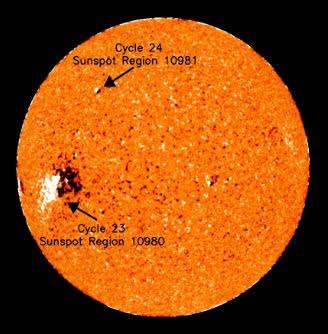
Scientist discovered that the sun has a spots a sign of impurity

In Job 25:5 “….And the stars are not pure in his eyes;”

Sunspots are darker, cooler areas on the surface of the sun in a region called the photosphere. The photosphere has a temperature of 5,800 degrees Kelvin. Sunspots have temperatures of about 3,800 degrees K. They look dark only in comparison with the brighter and hotter regions of the photosphere around them.

The Sun has a magnetic field that gets twisted around inside the Sun as it spins. There are places on the Sun where this magnetic field rises up from below the Sun’s surface and pokes through, creating sunspots. Sunspots are magnetic and often have a north and south pole like a magnet.


Starspots are stellar phenomena, so-named by analogy with sunspots. Spots actually at the size of sunspots would be very hard to detect on other stars because they are too small to cause detectable fluctuations in brightness. The commonly observed starspots are in general much larger than those on the Sun: up to about 30% of the stellar surface may be covered, corresponding to starspots 100 times larger than those on the Sun.

Behemoth is the Sauropod Dinosaur

In Job 40, the Lord is infallibly describing a real historical creature, called ‘Behemoth’. No known living animal, such as the elephant or hippopotamus, fits the passage adequately. A detailed analysis of the key clause Job 40:17
a suggests that the most natural interpretation is that the tail of Behemoth is compared to a cedar for its great size
. Consequently, the most reasonable interpretation is that Behemoth was a large animal, now extinct, which had a large tail. Thus some type of extinct dinosaur should still be considered a perfectly reasonable possibility according to our present state of knowledge.

The passage Job 40:15–24 gives a detailed description of the creature named ‘Behemoth’. There has been controversy as to what Behemoth really is. This paper focuses on the clause Job 40:17a, which is crucial to the proposition that Behemoth could have been a type of dinosaur. The other common proposals are also analyzed, and some general considerations are made concerning the whole passage.

Basic considerations:

The word ‘Behemoth’ (Job 40:15) is literally a plural form of a common Old Testament (OT) word meaning ‘beast’. However, practically all commentators and translators have agreed that here we have an intensive or majestic plural, so that the meaning is something like ‘colossal beast’. This case is similar to the word ‘Elohim’ (the most common name of God in the OT), which is actually a majestic plural form, but is always used with a singular verbal form, just as is encountered in this passage. Also, we read in verse 19 that Behemoth was the ‘chief of the ways of God’, which suggests that Behemoth was one of the largest (if not the largest) of God’s creatures.

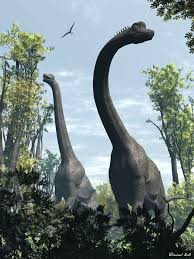
The Behemoth which we will consider in this paper is type of dinosaur called the “Sauropod

👉 Sauropoda, or the sauropods, are a clade of saurischian dinosaurs. They had very long necks, long tails, small heads, and four thick, pillar-like legs. They are notable for the enormous sizes attained by some species, and the group includes the largest animals to have ever lived on land.


The taxon ‘Dinosauria‘ was formally named in 1841 by paleontologist Sir Richard Owen, who used it to refer to the “distinct tribe or sub-order of Saurian Reptiles” that were then being recognized in England and around the world. The term is derived from Ancient Greek δεινός (deinos), meaning ‘terrible, potent or fearfully great’, and σαῦρος (sauros), meaning ‘lizard or reptile’.

In Genesis 1:24 “God said, “I command the earth to give life to all kinds of tame animals, wild animals, and reptiles.” And that’s what happened.


👉 In Leviticus 11:30 ” The gecko, the monitor lizard, the wall lizard, the skink and the chameleon.

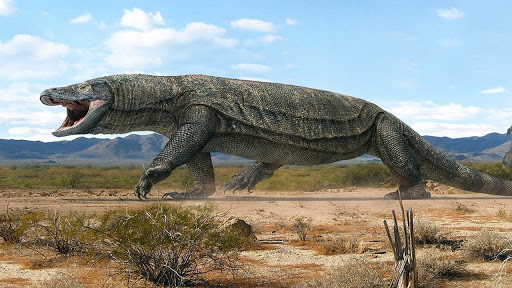
Megalania refers to an extinct giant goanna or monitor lizard, recognised as either Megalania prisca or Varanus priscus. They were part of the megafaunal assemblage that inhabited southern Australia during the Pleistocene. The youngest fossil remains dated to around 50,000 years ago.

The crooked serpent called Leviathan

The Bible states about Leviathan the crooked serpent?

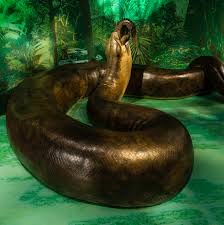
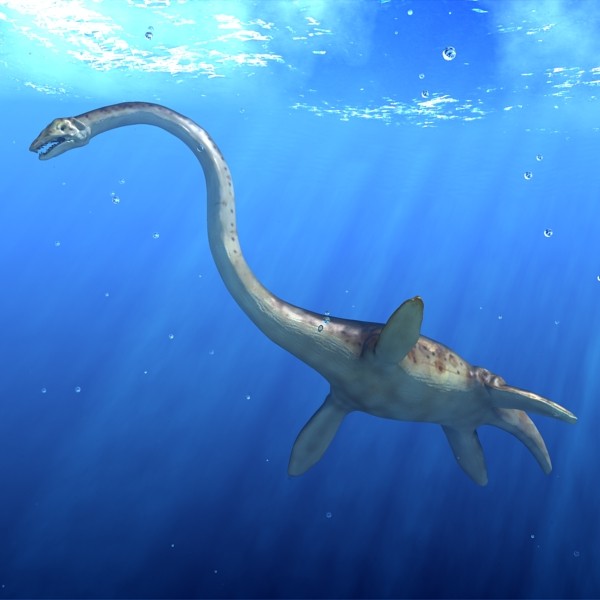
A extinct genus of a vey large serpent called the “Titanoboa” and the ” plesiosaurs ” a marine reptiles belong to Sauropterygia is the possible Leviathan .

👉 In Isaiah 27:1 “In that day the LORD with his hard and great and strong sword shall punish leviathan the fleeing serpent, even leviathan that twisted serpent; and he shall slay the monster that is in the sea.

Titanoboa is an extinct genus of very large snakes that lived in what is now La Guajira in northeastern Colombia. They could grow up to 12.8 m long and reach a weight of 1,135 kg. Fossils of Titanoboa have been found in the Cerrejón Formation, and date to around 58 to 60 million years ago.


The Plesiosauria or plesiosaurs are an order or clade of extinct Mesozoic marine reptiles, belonging to the Sauropterygia. Plesiosaurs first appeared in the latest Triassic Period, possibly in the Rhaetian stage, about 203 million years ago.

👉 In Psalms 74:14 ” It was you who crushed the heads of Leviathan and gave it as food to the creatures of the desert.


👉 In Psalms 104:26 “See the ships sailing along, and Leviathan, which you made to play in the sea.

God created a great sea monsters:

👉 In Genesis 1:21 “God created the great sea monsters and every living creature that moves, with which the waters swarmed after their kind, and every winged bird after its kind; and God saw that it was good.

The Bible confirm Moon has no light

You know that Earth would be a dismal place without its bright, shining neighbor — the sun. But did you know that the moon would also be just another dull orb if not for the sun’s rays?

Moon has no light?

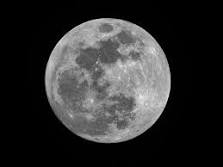
The Moon can only be seen as a result of the Sun’s light reflecting off it. It does not produce any light of its own.

The Bible confirm that the moon has no light !

In Job 25:5 ” Behold even to the moon, and it shineth not;…”

The moon shines because its surface reflects light from the sun. And despite the fact that it sometimes seems to shine very brightly, the moon reflects only between 3 and 12 percent of the sunlight that hits it. But the light coming from the Moon is an illusion. As you know, you’re actually seeing the reflected light from the Sun, bouncing off the Moon which acts like a mirror.

The perceived brightness of the moon from Earth depends on where the moon is in its orbit around the planet. The moon travels once around Earth every 29.5 days, and during its journey, it’s lit from varying angles by the sun.

This movement of the moon around the Earth — and the simultaneous orbiting of Earth around the sun — accounts for the moon’s different phases (full moon, quarter moon, etc.). At any given point in the moon’s trajectory around the Earth, only half of its surface is facing the sun, and therefore, only half of the moon is lit up. The other half of the surface faces away from the sun and is in shadow.

Design a site like this with WordPress.com
Get started