
SPACE WEAPONRY

Orbital weaponry is any weapon that is in orbit around a large body such as a planet or moon. As of September 2017, there are no known operative orbital weapons systems, but several nations have deployed orbital surveillance networks to observe other nations or armed forces. Several orbital weaponry systems were designed by the United States and the Soviet Union during the Cold War. During World War II Nazi Germany also was developing plans for an orbital weapon called the Sun gun, an orbital mirror that would have been used to focus and weaponize beams of sunlight.

Development of orbital weaponry was largely halted after the entry into force of the Outer Space Treaty and the SALT II treaty. These agreements prohibit weapons of mass destruction from being placed in space. As other weapons exist, notably those using kinetic bombardment, that would not violate these treaties, some private groups and government officials have proposed a Space Preservation Treaty which would ban the placement of any weaponry in outer space.

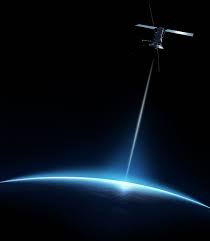
American war scientists are developing James Bond-style space laser guns which can destroy enemy satellites and space crafts.
Michael Griffin, the Pentagon’s defence undersecretary for research and engineering, said the US may create a weapon capable of firing neutral particle beams.

In Revelation 13:13 “And it performed great signs, even causing fire to come down from heaven to the earth in full view of the people.

The intergalactic ray gun was first developed in the 1990s in the ashes of the Cold War before being shelved.

Speaking with Defence One, Griffin said: “Directed energy is more than just big lasers.

“That’s important. High-powered microwave approaches can effect an electronics kill.

“The same with the neutral particle beam systems we explored briefly in the 1990s for use in space-based anti-missile systems.”

Griffin said that such particle beams have the “advantage of being non-attributable” meaning they leave no evidence as to how the attack was carried out.

Military intelligence website globalsecurity.org says particle beams are pefect for space warfare because they can travel in straight lines and are not affected by the planet’s magnetic field.

The rays are also very difficult to shield against and can be fired from long range, reports globalsecurity.org.

In February, it was claimed that Russia has created a plane-mounted laser capable of blasting enemy satellites out of space.

An anonymous source told Russian news agency Interfax that Vladimir Putin’s military engineers have “completed” the terrifying Star Wars-style weapon.

Sound Vibration

The Bible states the concept of audio signals traveling out of speakers can vibrate the wall they touch or are close to it the sound waves fed through the speaker travel in every direction.

In Habakuk 2:11 “The very stones in the walls cry out against you, and the beams in the ceilings echo the complaint.

A sound reinforcement system is the combination of microphones, signal processors, amplifiers, and loudspeakers in enclosures all controlled by a mixing console that makes live or pre-recorded sounds louder and may also distribute those sounds to a larger or more distant audience. In many situations, a sound reinforcement system is also used to enhance or alter the sound of the sources on the stage, typically by using electronic effects, such as reverb, as opposed to simply amplifying the sources unaltered.

Introduce Yourself (Example Post)

This is an example post, originally published as part of Blogging University. Enroll in one of our ten programs, and start your blog right.

You’re going to publish a post today. Don’t worry about how your blog looks. Don’t worry if you haven’t given it a name yet, or you’re feeling overwhelmed. Just click the “New Post” button, and tell us why you’re here.

Why do this?

  • Because it gives new readers context. What are you about? Why should they read your blog?
  • Because it will help you focus you own ideas about your blog and what you’d like to do with it.

The post can be short or long, a personal intro to your life or a bloggy mission statement, a manifesto for the future or a simple outline of your the types of things you hope to publish.

To help you get started, here are a few questions:

  • Why are you blogging publicly, rather than keeping a personal journal?
  • What topics do you think you’ll write about?
  • Who would you love to connect with via your blog?
  • If you blog successfully throughout the next year, what would you hope to have accomplished?

You’re not locked into any of this; one of the wonderful things about blogs is how they constantly evolve as we learn, grow, and interact with one another — but it’s good to know where and why you started, and articulating your goals may just give you a few other post ideas.

Can’t think how to get started? Just write the first thing that pops into your head. Anne Lamott, author of a book on writing we love, says that you need to give yourself permission to write a “crappy first draft”. Anne makes a great point — just start writing, and worry about editing it later.

When you’re ready to publish, give your post three to five tags that describe your blog’s focus — writing, photography, fiction, parenting, food, cars, movies, sports, whatever. These tags will help others who care about your topics find you in the Reader. Make sure one of the tags is “zerotohero,” so other new bloggers can find you, too.

Design a site like this with WordPress.com
Get started