Scientists from University of Illinois at Urbana-Champaign have found evidence of water in a galaxy named SPT0311-58. The galaxy is 12.8 billion light-years away from Earth. The scientists used Atacama Large Millimeter/submillimeter Array in Chile to gaze at the galaxy.
The Bible states
Waters above the heavens….
Psalms 148:4 " Praise him, you highest heavens, and you waters above the heavens!
Scientists studying SPT0311-58 found H20, along with carbon monoxide in the galaxy, which is located nearly 12.88 billion light years from Earth. Detection of these two molecules in abundance suggests that the molecular Universe was going strong shortly after the elements were forged in early stars. The new research comprises the most detailed study of molecular gas content of a galaxy in the early Universe to date and the most distant detection of H20 in a regular star-forming galaxy.
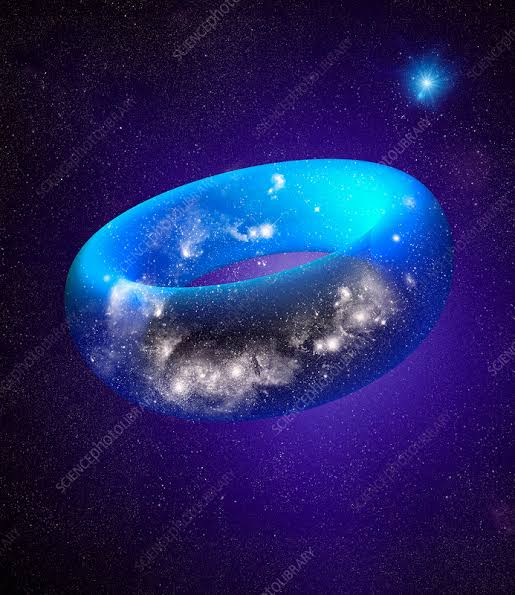
One model suggests that the cosmos once included various branes with up to eight dimensions, floating about in a nine-dimensional space with each dimension circling back on itself like a doughnut. The high-dimension branes may have smashed together and evaporated, whereas our universe.
“From one end of heavens and circles to their other end ” The so called circle of heaven with doughnut shape.
Psalms 19:6 " It rises from one end of the heavens and circles to their other end; nothing is hidden from its heat. "
Job 22:14 " Thick clouds cover Him, so that He cannot see, And He walks above the circle of heaven.’
The new data have generated both buzz and skepticism among cosmologists in recent weeks. Dr. Tegmark and other astronomers agree that the measurements are far from conclusive, or even persuasive about the shape of the universe.
But if true, the doughnut universe would force cosmologists to reconsider their theories about what happened in the earliest moments after the universe was born in the Big Bang; those theories predict an infinite cosmos.
The new findings have brought to center stage the hope that astronomers may be able to test speculations about the shape, or topology, of the universe that until recently have been relegated to the abstract mathematical margins of cosmology. The results are part of the bounty of data produced by a NASA satellite known as the Wilkinson Microwave Anisotropy Probe, built and operated by an international collaboration led by Dr. Charles L. Bennett of the Goddard Space Flight Center in Greenbelt, Md. The satellite recorded the pattern of heat, in the form of faint microwave radiation, that fills the sky.
This radiation is believed to be the afterglow of the Big Bang itself, and thus constitutes a portrait of the universe when it was only 380,000 years old.
As the COBE satellite first confirmed in 1992, the microwave cloud is laced with ripples and splotches — lumps in the cosmic gravy — from which galaxies and other cosmic structures would ultimately form.
According to theory, these lumps are born as microscopic fluctuations during the first instant of time and then amplified into sound waves as the universe expands and matter and energy slosh around.
Now the new satellite has illuminated the findings of COBE (pronounced KOE-bee, for Cosmic Background Explorer) in exquisite detail.
By analyzing these waves cosmologists can determine many of the characteristics of the universe, which scientists have long debated, like its age and density. To their delight, the first results from the Wilkinson satellite, released last month, confirmed many of the strange ideas that cosmologists entertained in the last decade, including the notion that most of the universe consists of something called dark energy, which is pushing space apart at an accelerating rate.
”Cosmologists have built a house of cards and it stands,” said Dr. James Peebles, a cosmologist at Princeton. But to their even greater delight, perhaps, as they dig into the trove released last month, cosmologists are finding hints of even more strangeness.
In principle, in an infinite universe, the waves in the cosmic fireball should appear randomly around the sky at all sizes. But, according to the new map, there seems to be a limit to the size of the waves, with none extending more than 60 degrees across the sky.
Most of the stars you see in the night sky with your naked eye are individual stars inside our own galaxy. It takes telescopes to see the stars outside our galaxy or even to see other galaxies. The stars in our galaxy are all orbiting in a nearly circular path around the center of the galaxy. They do this because the immense combined mass of the galaxy, most if it near the center, creates immense gravity that pulls all the stars in our galaxy into circular orbits. In addition, each star in the galaxy has a small random motion relative to the overall galactic rotation. The same concepts apply to stars in other galaxies. Each star orbits its galaxy’s center and has a slight random motion on top of this. Each star does not careen randomly about like a drunkard. Rather, each star travels on a smooth, nearly-straight trajectory as dictated by its own momentum and the local gravitational field. But when comparing the motion of many stars in a galaxy and subtracting out their galactic rotation, you end up with a random distribution. The reason for this is simply the randomness of the materials from which the stars formed, and the tendency of objects to drift under their own inertia in nearly the same path for eons in the near-vacuum of space.
Thousand of years before the scientific discovery is already revealed in Holy Bible that states about the orbits of the stars .
Judges 5:20 NLT ” The stars fought from heaven. The stars in their orbits fought against Sisera.
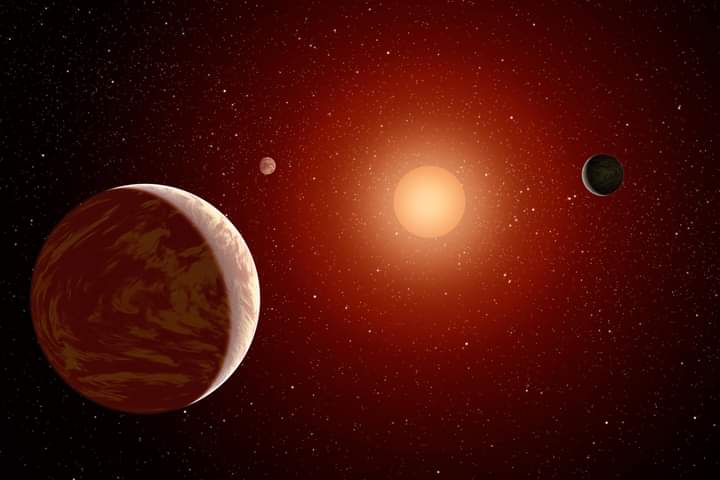
A star system or stellar system is a small number of stars that orbit each other, bound by gravitational attraction. A large group of stars bound by gravitation is generally called a star cluster or galaxy, although, broadly speaking, they are also star systems. Star systems are not to be confused with planetary systems, which include planets and similar bodies (such as comets).
A binary star is a star system consisting of two stars orbiting around their common barycenter. Systems of two or more stars are called multiple star systems.
Habakkuk 3:11 ISV ” The sun and moon stand still in their orbits; at the glint of your arrows they speed along, even at the gleam of your flashing spear.
Earth’s orbit:
While Earth orbits the sun, the planet is simultaneously spinning on an imaginary line called an axis that runs from the North Pole to the South Pole. It takes Earth 23.934 hours to complete a rotation on its axis and 365.26 days to complete an orbit around the sun.
Job 9:6 ISV ” He shakes the earth from its orbit, so that its foundations shudder.
Earth’s axis of rotation is tilted in relation to the ecliptic plane, an imaginary surface through the planet’s orbit around the sun. This means the Northern and Southern hemispheres will sometimes point toward or away from the sun depending on the time of year, and this changes the amount of light the hemispheres receive, resulting in the seasons.
Earth’s orbit is not a perfect circle, but rather an oval-shaped ellipse, similar to the orbits of all the other planets. Our planet is a bit closer to the sun in early January and farther away in July, although this variation has a much smaller effect than the heating and cooling caused by the tilt of Earth’s axis. Earth happens to lie within the so-called “Goldilocks zone” around the sun, where temperatures are just right to maintain liquid water on our planet’s surface.
What is happening now has happened before, and what will happen in the future has happened before, because God makes the same things happen over and over again.
Ecclesiastes 3:15
The block universe theory, as explained last year by Dr. Kristie Miller, posits that our universe might be a giant four-dimensional block of spacetime, containing all the things that ever happened and will happen in our traditional perception of time.
Dr. Miller, who is the joint director for the Centre for Time at the University of Sydney, explained the theory in a piece published by ABC Science. Miller described how all moments that exist are relative to each other within three spatial dimensions and a single time dimension.
The block universe theory is also known in some scientific circles as Eternalism, because it describes how the past, present, and future all co-exist ‘now’. This is opposed to Presentism, which states that the past doesn’t exist anymore and is constantly disappearing, thanks to that pesky notion of ‘present’ time.
In God’s timeline the past, present and future is all co -exist now?
all is already program in God’s timeline
Revelation 1:19 ” Therefore write the things which you have seen, and the things which are, and the things which will take place after these things.
Romans 4:17 “….and calling into being the things not even existing, “
Scientists know how the world will end. The Sun will run out of fuel and enter its red-giant phase. Its final burst of glory will expand and engulf the closest planets, leaving Earth a charred, lifeless rock. Our planet has around five billion years left.
With this grim image, theoretical astrophysicist Katie Mack begins her book on the end of the Universe — a much more uncertain prospect. Cosmologists generally look backwards, because all the evidence they can examine with telescopes is far away and concerns things that happened long ago. Using the motions of distant stars and galaxies to predict possible futures involves more speculation.
In Mack’s hands, this speculation makes for a fascinating story. Humans are, she writes, “a species poised between an awareness of our ultimate insignificance and an ability to reach far beyond our mundane lives, into the void, to solve the most fundamental mysteries of the cosmos”. She is a talented communicator of complex physics, and the passion and curiosity about astronomy that have made her a popular speaker and Twitter presence are evident here. (As are some nerdy jokes and a less compelling coda about new physics research tangential to the central theme.)
Mack begins at the beginning, with the Big Bang. What followed was inflation — a period of rapid expansion. Then, structures of dark matter formed and the building blocks of stars, planets, life and galaxies assembled. Currently, dark energy, thought to pervade the Universe, somehow counteracts the forces of gravity to keep driving expansion.
The Universe’s fate depends on whether that expansion will continue, accelerate or reverse.
The Big Crunch:
Astrophysicists long considered the most likely denouement to be a reversal of the Big Bang — the Big Crunch. Outside our cosmic neighbourhood, every galaxy is zooming away from us; a clear sign of expansion. If the Universe holds enough matter, including dark matter, the combined gravitational attraction of everything will gradually halt this expansion and precipitate the ultimate collapse. Over time, galaxies, then individual stars, will smash into each other more frequently, killing off any life on nearby planets. In the final moments, as densities and temperatures soar in a contracting inferno, all that remains will extinguish in a single point.
The Bible states…
👉 Hebrew 1:10 – 12 ” And, Thou, Lord, in the beginning hast laid the foundation of the earth; and the heavens are the works of thine hands:They shall perish; but thou remainest; and they all shall wax old as doth a garment; And as a vesture shalt thou fold them up, and they shall be changed: but thou art the same, and thy years shall not fail.
But dark energy might mean that a different end awaits. The early years of the Universe’s evolution were determined by the amount of matter it held; over the past few billion years, dark energy has begun to dominate, pushing the universe outwards. Current data from the European Space Agency’s Planck telescope and other sources are consistent with this expansion continuing forever.
thermodynamic terms, she explains, the Universe will approach a state of minimum temperature and maximum entropy. As everything gets farther and farther apart, the material of dead stars will disperse so that new stars can’t form, and the galaxies they’re part of will gradually stop growing. It’s like a suffocation of all astrophysical activity, as the fuel for growth and reproduction becomes so diffuse as to be unusable. It is an end “marked by increasing isolation, inexorable decay, and an eons-long fade into darkness”.
The third demise that Mack discusses is the Big Rip. This is in store if dark energy accelerates expansion even more than is currently expected. As the Universe balloons, eventually, gravitational forces won’t be able to keep galactic clusters together. Stars will be stripped away from each other, and solar systems such as ours won’t have the strength to stay together. The remaining stars and planets will explode. Finally, the last atoms will be ripped apart.
The latest measurements point to a Heat Death, but a Big Crunch or Big Rip are within their uncertainties.
The final doomsday scenario that Mack describes is extremely unlikely: vacuum decay. A tiny bubble of ‘true vacuum’ could form, owing to instability in the field associated with the Higgs boson. That might happen if, say, a black hole evaporates in just the wrong way. Such a bubble would expand at the speed of light, destroying everything, until it cancels the universe. Vacuum decay might already have begun in some distant place. We won’t see it coming.
Not to worry, though. As Mack counsels, whatever it looks like, the end probably won’t be nigh for at least 200 billion years.
A reservoir of water three times the volume of all the oceans has been discovered deep beneath the Earth’s surface. The finding could help explain where Earth’s seas came from.
The water is hidden inside a blue rock called ringwoodite that lies 700 kilometres underground in the mantle, the layer of hot rock between Earth’s surface and its core.
The huge size of the reservoir throws new light on the origin of Earth’s water. Some geologists think water arrived in comets as they struck the planet, but the new discovery supports an alternative idea that the oceans gradually oozed out of the interior of the early Earth.
The Bible states … In the Time of Noah God’s open a vast body of water beneath the earth .
Genesis 7:11 GNB “When Noah was six hundred years old, on the seventeenth day of the second month all the outlets of the vast body of water beneath the earth burst open, all the floodgates of the sky were opened.
Scientists scanning the deep interior of Earth have found evidence of a vast water reservoir beneath eastern Asia that is at least the volume of the Arctic Ocean.
The discovery marks the first time such a large body of water has found in the planet’s deep mantle.
Researchers have identified a previously hidden link between our immune system and the activation of cells that lead to organ rejection.
The discovery opens the way for scientists to develop new forms of treatment that could prevent immune responses from attacking life-saving tissue transplants without leaving the body so open to infection or cancer.
A type of receptor on bone marrow cells called signal regulatory protein alpha (SIRPα) has been identified by scientists from the University of Pittsburgh as the body’s watchdog responsible for dispatching the lymphocytes that target and destroy foreign cells.
In simple terms, whenever we take cells from another person’s body and put them into our own, white blood cells see them as foreign and attempt to break them apart.
Organs rejection is Biblical !
1 Corinthians 15:39 ” Not all flesh is the same: People have one kind of flesh, animals have another, birds another and fish another.
Not only is this bad news for the transplanted tissues, the swelling and fever that comes with the immune response isn’t exactly a picnic either.
The mechanisms behind the white blood cell assault are fairly well understood – molecules on the outside of the cells belonging to what’s called the major histocompatibility complex (MHC) identify them as different.
A type of white blood cell called a T lymphocyte has receptors on its surface capable of recognising unknown MHC proteins and responds by attempting to break up the foreign material they’re attached to.
Lymphocytes aren’t born knowing what’s foreign and what’s not; they need to be taught. Which is the job of another part of the immune system called a dendritic cell.
Dendritic cells chew up foreign proteins and weave them into their own MHC before displaying them on their surface like a microscopic ‘wanted’ poster. They then migrate into the body’s lymph nodes where they interact with the gun-slinging T lymphocytes.
Exactly how dendritic cells identify foreign materials, however, has been something of a mystery.
To learn more, the researchers studied the transplanted tissues in mice engineered to lack certain white blood cells such as their T lymphocytes.
They found that differences between the mice donor’s and recipient’s SIRPα gene correlated with the recipient’s immune responses.
SIRPα isn’t an unknown protein, already understood to bind to another protein called CD47 that triggers a range of immune responses in different white blood cells.
Joining the dots, the researchers believe CD47 on monocytes – the white blood cells that grow into dendritic cells – interact with SIRPα receptors on foreign tissues, setting off the entire ID check process.
“Once these cells are activated, then they turn around and activate the rest of the immune system, and that leads to the full-blown rejection of the organ,” lead researcher Fadi Lakkis from the University of Pittsburgh told Liz Reid at 90.5 WESA.
What we would like to do is sequence the SIRP-alpha gene in many humans who are donors and recipients of organ or bone marrow, and then ask whether a mismatch affects the outcome after transplantation.”
A better match between the donor’s and recipient’s SIRPα genes could help reduce the risk of the immune response being sparked in the first place.
Even when organs are chosen to have closely matching MHC proteins, subtle differences can still produce immune responses. For example, one in 10 hearts and nearly one in 20 kidneys will show signs of being rejected by the body within the first year in spite of being declared compatible.
To avoid rejection, organ recipients need to be on treatments that suppress the immune system, not only making them prone to infection and cancer but often raising the risk of heart attacks and strokes by increasing blood pressure.
New treatments focussing on SIRPα might help reduce the doses or types of medications, and possibly help prolong the organ’s life.
Snake venom can be deadly. It is estimated that over 5 million people every year are bitten by snakes. This results in over 400,000 amputations and up to 125,000 fatalities. Snake venom is thought to be saliva that has evolved into the venom over evolutionary history. Snakes use the venom to kill or subdue their prey, venom can also have digestive actions too, helping a snake to digest and eat its prey.
It is usually injected by fangs and is secreted by a gland found on either side of a snake’s head. The venom contains many different compounds and different types of toxins are made by different snakes. Some of the typical venom symptoms include pain, inflammation, tissue necrosis, coma, breathing difficulties and death.
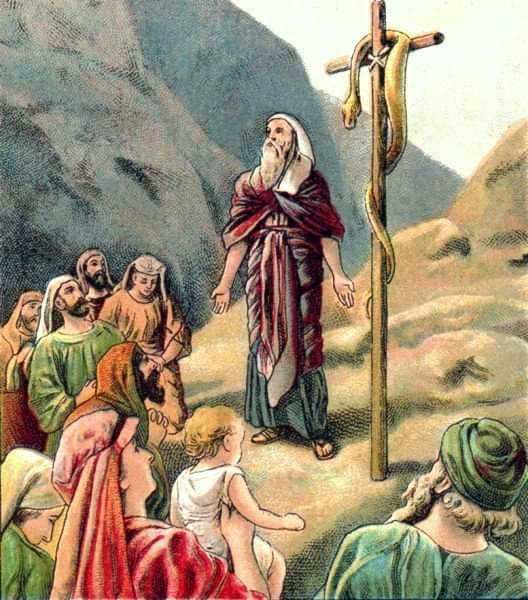
The principle of anti venom of snake ,was already God’s revealed it to Prophet Moses, whe he ordered Moses to make a bronze statue of snake …that anyone bitten by a snake who looked in that statue will lived.
God is teaching us that the snake bite cure is also from snake himself, this is the principle of anti venom that is also taken from the snake.
Numbers 21:6-9
“Then the Lord sent venomous snakes among them; they bit the people and many Israelites died.The people came to Moses and said, “We sinned when we spoke against the Lord and against you. Pray that the Lord will take the snakes away from us.” So Moses prayed for the people.The Lord said to Moses, “Make a snake and put it up on a pole; anyone who is bitten can look at it and live.” So Moses made a bronze snake and put it up on a pole. Then when anyone was bitten by a snake and looked at the bronze snake, they lived.”
Venom – not all bad news
Some of the most interesting compounds are proteins and peptides – and these agents could be useful in our treatment of both snake bites and other medical conditions. Previous studies have highlighted benefits ranging from the antimicrobial and anti-inflammatory properties – to possible uses as anti-cancer agents and possible use in stroke victims due to the anti-coagulation properties of some of the proteins in snake venom.
However, it is thought that the feeding and environmental conditions could affect the profile of the venom harvested from snakes. The purpose of the study referenced above was to discover whether this was the case with two varieties of Malaysian snakes that are considered medically important. The team used chromatography to separate and identify the different proteins and peptides in the venom. The use of chromatography to screen for compounds in a sample is discussed in the article, Sensitive and Robust Screening of Hundreds of PPCP Compounds Using Online SPE-LC-MS/MS.
The team used chromatography to identify several proteins that had not previously been reported in snake venom. They report: These data may be utilized for improved antivenom production, understanding pathological effects of envenoming, and the discovery of biologically active peptides with medical and/or biotechnological value.
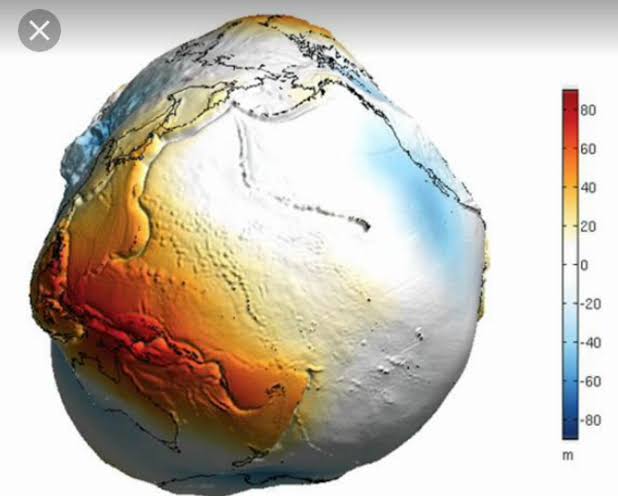
the Earth’s geoid: a way of describing Earth’s gravitational field ,Earth is formless without water contain it’s surface.
The Bible states that the earth is formless exact what Word of God claimed if the earth looks like without water ,and the depths of oceans covered with darkness.
Genesis 1:2 ” Now the earth was formless and empty, darkness covered the surface of the watery depths, and the Spirit of God was hovering over the surface of the waters.
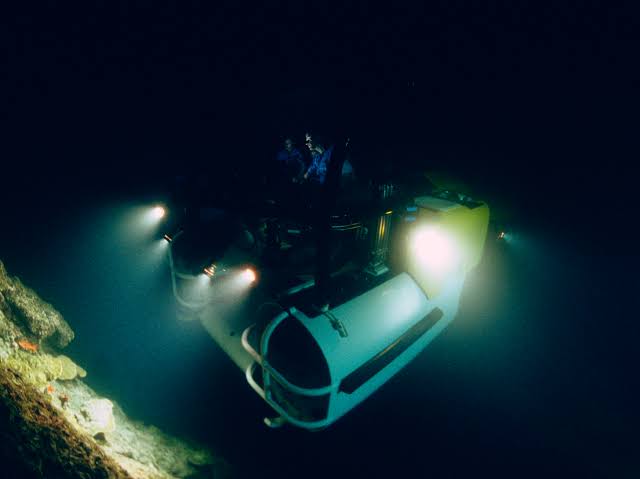
The Group scientist researchers discovered it was dark down there at the bottom of the Oceans —darker than you can probably even imagine! Let me explain.
The ocean is very, very deep; light can only penetrate so far below the surface of the ocean. As the light energy travels through the water, the molecules in the water scatter and absorb it.
The dark depths:
Almost no light penetrates below 1,000m. The water is cold, reaching 3ºC, and contains very little oxygen. The pressure is enormous, up to 1,000 times that on the surface. These dark waters include the bathypelagic (1,000-4,000m), abyssopelagic (4,000m to the ocean floor) and hadopelagic (water in ocean trenches) zones.
The “Earth Pillars” and Foundations is divided into lithosphere, asthenosphere, mesospheric mantle, outer core, and the inner core.
Earth pillars consist of stones in the pit:
Isaiah 14:19 “But thou art cast out of thy grave like an abominable branch, [and as] the raiment of those that are slain, thrust through with a sword, that go down to the ROCKS of the pit; as a carcase trodden under feet.
A slab sinking through the upper mantle and upper-lower mantle, then stalling and pooling at a depth of 930 miles where there’s an extremely stiff or viscous layer. Below that, slabs continue to sink to the core-mantle boundary – Lowell Miyagi, University
We know about the crust under the oceans and continents, the mantle that goes on for 2,900 kilometers (1,800 miles), and the iron core. Now, Earth’s got a new layer. By crushing minerals between anvils made of diamonds, researchers have discovered that the top part of the lower mantle contains an incredibly stiff layer of rock. Thefindings were published in Nature Geoscience this week.
Scientists have discovered a layer of liquified molten rock in Earth’s mantle that may be responsible for the sliding motions of the planet’s massive tectonic plates.
The finding may carry far-reaching implications, from understanding basic geologic functions of the planet to new insights into volcanism and earthquakes.
The Bible states about earth foundation:
Psalms 104:5 ” Who laid THE FOUNDATIONS of the earth,
Job 38:4 ,6 ” Where wast thou when I laid THE FOUUNDATIONS the of the earth? declare, if thou hast understanding…””Whereupon are THE FOUNDATIONS thereof fastened? or who laid the corner stone thereof
Statistical description of the heterogeneity of earth foundation beds with random layer arrangement
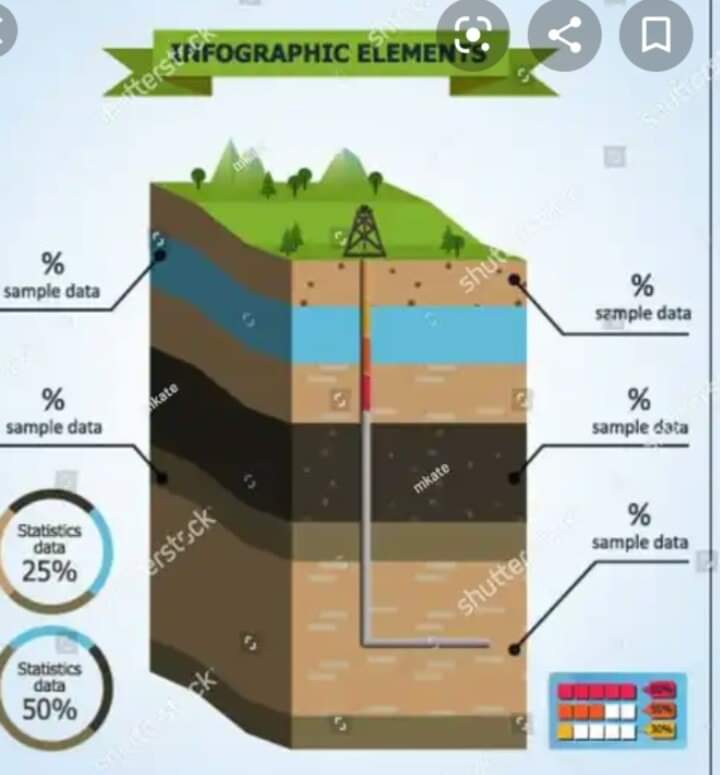
The interior structure of the Earth, similar to the outer, is layered. These layers can be defined by either their chemical or their rheological properties. The Earth has an outer silicate solid crust, a highly viscous mantle, a liquid outer core that is much less viscous than the mantle, and a solid inner core. Scientific understanding of Earth’s internal structure is based on observations of topography and bathymetry, observations of rock in outcrop, samples brought to the surface from greater depths by volcanic activity, analysis of the seismic waves that pass through the Earth, measurements of the gravity field of the Earth, and experiments with crystalline solids at pressures and temperatures characteristic of the Earth’s deep interior which is the foundation of earth structure.
The structure of Earth can be defined in two ways: by mechanical properties such as rheology, or chemically. Mechanically, it can be divided into lithosphere, asthenosphere, mesospheric mantle, outer core, and the inner core. The interior of Earth is divided into 5 important layers. Chemically, Earth can be divided into the crust, upper mantle, lower mantle, outer core, and inner core. The geologic component layers of Earth is the pillar and foundation of earth structure .
Also the Bible states about earth pillars:
Job 9:6 “Which shaketh the earth out of her place, and THE PILLARS thereof tremble.”
1 Samuel 2:8 “‘for THE PILLARS of the earth are the Lord’s, and he hath set the world upon them;
Psalms 75:3 World English Bible The earth and all its inhabitants quake. I firmly hold its PILLARS. Selah.
EARTH CRUST IS THE FACE OF THE EARTH IT IS THE OUTERMOST SOLID SHELL OF THE EARTH .
And he made from one man every nation of mankind to live on all the face of the earth, having determined allotted periods and the boundaries of their dwelling place,(Acts 17:26)
Geologists in the US say Earth might have a previously undiscovered layer of ultra-strong rock hiding in its mantle, some 1,500 km (930 miles) beneath our feet.
The new layer is up to three times stronger than rocks in the less viscous upper mantle, and could explain why portions of sinking tectonic plates sometimes stall and thicken at this depth – a phenomenon that has for years puzzled geologists.
The finding challenges the existing understanding of Earth’s internal structure, and researchers say, if it’s true, it might also help explain the occurrence of earthquakes in the deep mantle.
Earth’s main layers include its relatively thin crust, which extends from just below the surface to about 80 km deep. Next there’s the mantle, which extends to about 2,900 km deep, followed by its iron core.
“Most layers are defined by the minerals that are present,” said geophysicist Lowell Miyagi from the University of Utah in a press release. “Essentially, we have discovered a new layer in the Earth. This layer isn’t defined by the minerals present, but by the strength of these minerals.”
The team’s results, which were published in the journal Nature Geoscience, suggest the new, ultra-stiff rock layer is located somewhere near the the middle of the mantle, and is temporarily trapping subducting plates.
The crust of the Earth is composed of a great variety of igneous, metamorphic, and sedimentary rocks. The crust is underlain by the mantle. The upper part of the mantle is composed mostly of peridotite, a rock denser than rocks common in the overlying crust. The boundary between the crust and mantle is conventionally placed at the Mohorovičić discontinuity, a boundary defined by a contrast in seismic velocity. The crust occupies less than 1% of Earth’s volume.The oceanic crust of the sheet is different from its continental crust. The oceanic crust is 5 km (3 mi) to 10 km (6 mi) thickand is composed primarily of basalt, diabase, and gabbro. The continental crust is typically from 30 km (20 mi) to 50 km (30 mi) thick and is mostly composed of slightly less dense rocks than those of the oceanic crust. Some of these less dense rocks, such as granite, are common in the continental crust but rare to absent in the oceanic crust. Both the continental and oceanic crust “float” on the mantle. Because the continental crust is thicker, it extends both above and below the oceanic crust. The slightly lighter density of felsic continental rock compared to basaltic ocean rock contributes to the higher relative elevation of the top of the continental crust. Because the top of the continental crust is above that of the oceanic, water runs off the continents and collects above the oceanic crust. The continental crust and the oceanic crust are sometimes called sial and sima respectively. Because of the change in velocity of seismic waves it is believed that on continents at a certain depth sial becomes close in its physical properties to sima, and the dividing line is called the Conrad discontinuity.



 THE SCIENCE OF THE BIBLE