The concept of Nanotechnology

THE CONCEPT OF NANOTECHNOLOGY

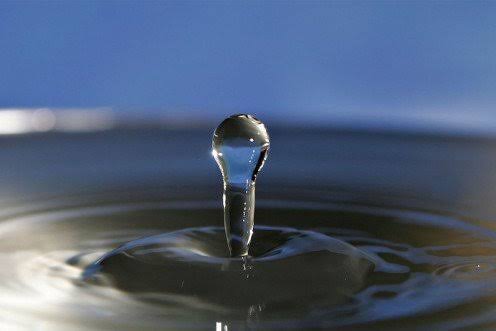
The Bible states about concept of nanotechnology that how a big camel will enter into a tiny eyes of a needle. This concept is called “nanotechnology ” Big things from a Tiny World:

In Matthew 19:24 “Again I tell you, it is easier for a camel to go through the eye of a needle…’–

Nanoscience and nanotechnology are the study and application of extremely small things and can be used across all the other science fields, such as chemistry, biology, physics, materials science, and engineering. The ideas and concepts behind nanoscience and nanotechnology started with a talk entitled “There’s Plenty of Room at the Bottom” by physicist Richard Feynman at an American Physical Society meeting at the California Institute of Technology (CalTech) on December 29, 1959, long before the term nanotechnology was used. In his talk, Feynman described a process in which scientists would be able to manipulate and control individual atoms and molecules. Over a decade later, in his explorations of ultraprecision machining, Professor Norio Taniguchi coined the term nanotechnology. It wasn’t until 1981, with the development of the scanning tunneling microscope that could “see” individual atoms, that modern nanotechnology began.

Water is life the origin of life

LIFE IS ORIGINATE IN WATER

The Bible states that moving living creature was originated in water who spring forth abundantly of living creatures :

In Genesis 1:20-22 “And God said, Let the waters spring forth abundantly the moving creature that hath life, and fowl that may fly above the earth in the open firmament of heaven.And God created great whales, and every living creature that moveth, which the waters spring forth abundantly, after their kind, and every winged fowl after his kind: and God saw that it was good.And God blessed them, saying, Be fruitful, and multiply, and fill the waters in the seas, and let fowl multiply in the earth.-

At the time it was widely agreed that stromatolites were oldest known lifeform on Earth which had left a record of its existence. Therefore, if life originated on Earth, this happened sometime between 4.4 billion years ago, when water vapor first liquefied, and 3.5 billion years ago.

👇👇👇

Life is originated in living water: God ‘s is the source of the living water that spring forth abundantly of living creatures that hath life.

In Jeremiah 2:13 “My people have committed two sins: They have forsaken me, the spring of living water…” –

Scientist believe that life orginate in water: Biologists tend to prefer the sea theory, which posits that life began at deep-sea hydrothermal vents, where super-heated, mineral-charged water seeps up from inside the earth to nourish and sustain organisms. It seems reasonable. The sea could shelter early life from the relentless meteor strikes and deadly solar UV radiation that once scorched the young planet’s surface. And the vents would provide food, or energy, in the form of hydrogen gas and minerals such as sulfur and iron. Michael Russell, who heads the planetary chemistry and astrobiology group at the Jet Propulsion Laboratory in Pasadena, California, a group charged with preparing to search for life in space, favors the sea theory. He says that as alkaline water seeped from certain types of vents, it would have mixed with ancient Earth’s acidic seawater, creating a tiny electrochemical charge that could have given rise to the first organisms. “­Hydrothermal vents are great places to live,” Russell says. As for the search for the origins of life, Reeves agrees that hydrothermal vents in the oceans are still a very favorable place for life to emerge.

It is called the “spring of the sea” (Hydrothermal vents)

In Job 38:16 “Hast thou entered into the springs of the sea? or hast thou walked in the search of the depth?

The Truth about climate change and Ozone depletion

⏩ THE TRUTH ABOUT CLIMATE CHANGE IN OZONE DEPLETION

As the climate warms, sea ice and the ice sheets in Greenland and the Antarctic continue to melt. These and other factors lead to increases in sea level and further warming of the Earth. Climate change will manifest in many many ways, including changes in weather patterns and more extreme weather events. For some, though, rising sea levels may leave them underwater, Michael Mann said in an interview with The Guardian earlier this month.

👉 See the disappearing islands:

In Revelation 16:20 “And every island disappeared, and all the mountains were leveled.–

According to the EPA, global sea level has risen by eight inches since 1870. This change is already affecting many low lying islands that have had to adapt. Some populations are moving to higher areas, or are trying to buy land from other countries to migrate its citizens, and some have even developed new ways of farming to protect their agriculture. 2007 estimates from the Intergovernmental Panel On Climate Change’s most conservative estimates suggest that global sea level will reach increase 8 to 16 inches above 1990 levels by 2090. The National Academy of Sciences predictions from 2009 suggest that by 2100, sea level could increase by anywhere from 16 inches to 56 inches, depending how the Earth responds to changing climate. See the islands and how they are coping with rising sea levels.

👉 Islands That Will Vanish When Sea Levels Rise Kiribati,Maldives ,Seychelles,Tuvalu ,Torres Strait Islands,Tegua ,Solomon islands Micronesia ,Palau ,Carteret Islands,and Bangladesh.

———

👉 Ozone depletion disappearance of our Ozone layer :

👇👇👇

Disappearance of Ozone sky !

“The sky vanished like a scroll that is being rolled up, and every mountain and island was removed from its place.- ( Revelation 6:14)

Because of the vanishing of our ozone sky the ice from arctic region and antartic region melted with leads to increasing sea level that cause islands to be disappeared. As climate change causes temperature to rise, ice melts. Much of this ice is in the Arctic and Antarctic.

“As heat and drought snatch away the melted snow,..” — ( Job 24:19 )

Great Quake and tsunami waves ?

“Therefore will not we fear, though the earth be removed, and though the mountains be carried into the midst of the sea;though its waters roar and foam and the mountains quake with their surging— ( Psalms 46:2-3)

———–

“We fall into the sleep of death, never to rise again, until the sky disappears. — ( Job 14:12)

Ozone depletion, gradual thinning of Earth’s ozone layer in the upper atmosphere caused by the release of chemical compounds containing gaseous chlorine or bromine from industry and other human activities. The thinning is most pronounced in the polar regions, especially over Antarctica. When chlorine and bromine atoms come into contact with ozone in the stratosphere, they destroy ozone molecules. One chlorine atom can destroy over 100,000 ozone molecules before it is removed from the stratosphere. Ozone can be destroyed more quickly than it is naturally created. Consequences of ozone layer depletion. Since the ozone layer absorbs UVB ultraviolet light from the sun, ozone layer depletion increases surface UVB levels (all else equal), which could lead to damage, including increase in skin cancer.

Acrophobia

⏩ACROPHOBIA

The Bible states about phobia that called acrophobia it is a fear of heights

In Ecclesiastes 12:5 “Also, they are afraid of heights and dangers on the road;…”

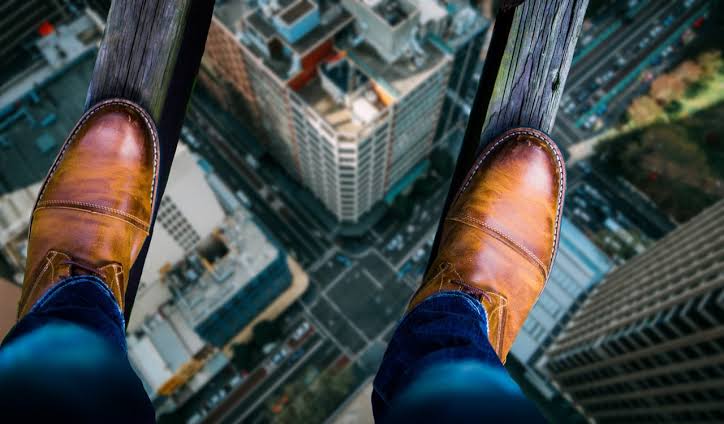
A fear of heights is called acrophobia. Acrophobia can range from fear when on the top floor of a tall building, to fear of standing on a chair. People with acrophobia feel a sense of panic when they’re at a certain height and often become unable to trust their sense of balance.


Road accident:

👇👇

In Ecclesiastes 12:5 “When men fear the heights and dangers of the road…”

In 2013, 54 million people worldwide sustained injuries from traffic collisions.This resulted in 1.4 million deaths in 2013, up from 1.1 million deaths in 1990. About 68,000 of these occurred in children less than five years old. Almost all high-income countries have decreasing death rates, while the majority of low-income countries have increasing death rates due to traffic collisions. Middle-income countries have the highest rate with 20 deaths per 100,000 inhabitants, accounting for 80% of all road fatalities with 52% of all vehicles. While the death rate in Africa is the highest (24.1 per 100,000 inhabitants), the lowest rate is to be found in Europe (10.3 per 100,000 inhabitants).

Amazon forest is burning

The Amazon is being shrouded in plumes of smoke as fires rage across parts of the rainforest, imperilling the so-called “lungs of the planet” and the vast array of life to which it is home.

The Bible states:

⏩ As fire consumes the forest or a flame sets the mountains ablaze,– ( Psalms 83:14 )

⏩ “Likewise, the tongue is a small part of the body, but it makes great boasts. Consider what a great forest is set on fire by a small spark. (James 3:6 )


Visible from outer space, the smoke billows have prompted international alarm, calls for action and much finger-pointing over what, or who, is responsible for the burning.

Brazilian President Jair Bolsonaro, in particular, has come under intense scrutiny for his controversial stewardship of Brazil’s majority share of the rainforest.

Al Jazeera answers some of the major questions being asked about the crisis in the Amazon, one of Earth’s greatest natural treasures.

Where are the fires?
The fires are burning across a range of states in Brazil’s section of the Amazon rainforest.

Northerly Roraima down through Amazonas, Acre, Rondonia and Mato Grosso do Sul have all been badly affected.

Brazil’s National Institute for Space Research (INPE) spotted more than 9,500 new forest fires in Brazil since August 15 alone, while atmospheric monitoring agencies have tracked smoke from the Amazon region drifting thousands of kilometres across the Latin American giant to the Atlantic coast and Sao Paulo, briefly turning daytime in Brazil’s biggest city to night on Monday.

Amazonas, Brazil’s largest state, declared a state of emergency on August 9 while Acre has been on environmental alert since August 16 due to the fires.

Several other countries in the Amazon region, including Bolivia and Peru, which both border Brazil, have also seen a surge in fires this year, according to INPE data.

How many?
The INPE recorded nearly 73,000 fires in Brazil between January and August this year – the highest since INPE records began in 2013 and a more than 80 percent bump on the figure for the same period last year. Most of them were in the Amazon.

Meanwhile, as of August 16, a NASA analysis suggested that “total fire activity across the Amazon basin has been close to the average in comparison to the past 15 years”. NASA noted that the Amazon spreads across several countries.

It also added, “though activity appears to be above average in the states of Amazonas and Rondonia, it has so far appeared below average in Mato Grosso and Para”.

What’s causing them?
Fires are a regular and natural occurrence in the Amazon at this time of year, during the dry season.

But environmentalists and non-governmental organisations have attributed the record number of fires to farmers setting the forest alight to clear land for pasture and to loggers razing the forest for its wood, with INPE itself ruling out natural phenomena being responsible for the surge.

Critics say far-right President Bolsonaro’s weakening of Brazil’s environmental agency, IBAMA, and push to open up the Amazon region for more farming and mining has emboldened such actors and created a climate of impunity for those felling the forest illegally.

Recent evidence appears to bear that out with preliminary data showing deforestation in the Brazilian Amazon is skyrocketing under Bolsonaro’s watch.

The rate of forest destruction soared more than 278 percent in July compared with the same month a year ago, according to research by the Amazon Environmental Research Institute. Previously, INPE pegged the rate of deforestation in June at 88 percent higher than during the corresponding month in 2018.

“These statistics speak to who is in power and what he (Bolsonaro) is doing to undermine environmental protection … and open the floodgates to illegal and destructive behaviour,” said Christian Poirier, Brazil programme director for NGO Amazon Watch.

Bolsonaro’s government, meanwhile, has offered a range of explanations for the blazes – including increased drought and the president himself making unfounded claims that NGOs had started the fires in an attempt to undermine his administration after it slashed their funding.

On Friday, Bolsonaro said he had authorised the use of troops to help contain the blazes and stop illegal deforestation, but he also blamed the weather for the fires.

Why does the Amazon matter?
The Amazon is the largest tropical forest in the world, covering more than five million square kilometres across nine countries: Brazil, Bolivia, Colombia, Ecuador, French Guiana, Guyana, Peru, Suriname and Venezuela.

The Amazon Rainforest – Map
It acts as an enormous carbon sink, storing up to an estimated 100 years worth of carbon emissions produced by humans, and is seen as vital to slowing the pace of global warming.

“The Amazon is the most significant climate stabiliser we have, it creates 20 percent of the air we breathe and it also holds 20 percent of the fresh flowing water on the planet,” Poirier said.

Put simply, he added, preserving the forest is of “critical importance” for both the region it encompasses and the rest of the world.

But in the last half-century alone, nearly 20 percent of the forest has disappeared.

Scientists have warned that if tree loss in the Amazon were to pass a certain “tipping point”, somewhere between 25 and 40 percent, deforestation could start to feed on itself and lead to the demise of the forest within a matter of decades.

“One of the cornerstones of climatic stability on our planet is in peril and the consequences of this are almost too large to fathom,” Poirier said. “The future of our civilisation depends on its integrity.”

Who (and what) calls the Amazon home?
The Amazon has been inhabited by humans for at least 11,000 years and is home to more than 30 million people – about two-thirds of whom live in cities carved out of the greenery.

Among those living in the region are about one million indigenous people who are divided into some 400 tribes., according to indigenous rights group Survival International.

Most live in villages, though some remain nomadic, with each tribe possessing its distinct language and culture, both of which are traditionally intimately intertwined with the surrounding environment.

Jonathan Mazower, a spokesman for Survival International, said the tribes were “dependent on their forests for everything, and have managed and looked after them for millennia”.

“[But] many are seeing their lands burned in front of their eyes, and with it their livelihood, source of food, medicines, and their very homes,” he added.

NEWS /ENVIRONMENT
The Amazon is burning: What you need to know

Where are the fires? Why is the Amazon important? Six things to know about the fires burning in the ‘lungs of Earth’.

by David Child
24 Aug 2019 GMT+3
The Amazon is being shrouded in plumes of smoke as fires rage across parts of the rainforest, imperilling the so-called “lungs of the planet” and the vast array of life to which it is home.

Visible from outer space, the smoke billows have prompted international alarm, calls for action and much finger-pointing over what, or who, is responsible for the burning.

Brazilian President Jair Bolsonaro, in particular, has come under intense scrutiny for his controversial stewardship of Brazil’s majority share of the rainforest.

Al Jazeera answers some of the major questions being asked about the crisis in the Amazon, one of Earth’s greatest natural treasures.

Where are the fires?
The fires are burning across a range of states in Brazil’s section of the Amazon rainforest.

Northerly Roraima down through Amazonas, Acre, Rondonia and Mato Grosso do Sul have all been badly affected.

Brazil’s National Institute for Space Research (INPE) spotted more than 9,500 new forest fires in Brazil since August 15 alone, while atmospheric monitoring agencies have tracked smoke from the Amazon region drifting thousands of kilometres across the Latin American giant to the Atlantic coast and Sao Paulo, briefly turning daytime in Brazil’s biggest city to night on Monday.

Amazonas, Brazil’s largest state, declared a state of emergency on August 9 while Acre has been on environmental alert since August 16 due to the fires.

Several other countries in the Amazon region, including Bolivia and Peru, which both border Brazil, have also seen a surge in fires this year, according to INPE data.

How many?
The INPE recorded nearly 73,000 fires in Brazil between January and August this year – the highest since INPE records began in 2013 and a more than 80 percent bump on the figure for the same period last year. Most of them were in the Amazon.

Meanwhile, as of August 16, a NASA analysis suggested that “total fire activity across the Amazon basin has been close to the average in comparison to the past 15 years”. NASA noted that the Amazon spreads across several countries.

It also added, “though activity appears to be above average in the states of Amazonas and Rondonia, it has so far appeared below average in Mato Grosso and Para”.

What’s causing them?
Fires are a regular and natural occurrence in the Amazon at this time of year, during the dry season.

But environmentalists and non-governmental organisations have attributed the record number of fires to farmers setting the forest alight to clear land for pasture and to loggers razing the forest for its wood, with INPE itself ruling out natural phenomena being responsible for the surge.

Critics say far-right President Bolsonaro’s weakening of Brazil’s environmental agency, IBAMA, and push to open up the Amazon region for more farming and mining has emboldened such actors and created a climate of impunity for those felling the forest illegally.

Brazil fires
The Amazon is the largest tropical forest in the world, covering more than five million square kilometres [Ueslei Marcelino/Reuters]
Recent evidence appears to bear that out with preliminary data showing deforestation in the Brazilian Amazon is skyrocketing under Bolsonaro’s watch.

The rate of forest destruction soared more than 278 percent in July compared with the same month a year ago, according to research by the Amazon Environmental Research Institute. Previously, INPE pegged the rate of deforestation in June at 88 percent higher than during the corresponding month in 2018.

“These statistics speak to who is in power and what he (Bolsonaro) is doing to undermine environmental protection … and open the floodgates to illegal and destructive behaviour,” said Christian Poirier, Brazil programme director for NGO Amazon Watch.

Bolsonaro’s government, meanwhile, has offered a range of explanations for the blazes – including increased drought and the president himself making unfounded claims that NGOs had started the fires in an attempt to undermine his administration after it slashed their funding.

On Friday, Bolsonaro said he had authorised the use of troops to help contain the blazes and stop illegal deforestation, but he also blamed the weather for the fires.

Why does the Amazon matter?
The Amazon is the largest tropical forest in the world, covering more than five million square kilometres across nine countries: Brazil, Bolivia, Colombia, Ecuador, French Guiana, Guyana, Peru, Suriname and Venezuela.

The Amazon Rainforest – Map
It acts as an enormous carbon sink, storing up to an estimated 100 years worth of carbon emissions produced by humans, and is seen as vital to slowing the pace of global warming.

“The Amazon is the most significant climate stabiliser we have, it creates 20 percent of the air we breathe and it also holds 20 percent of the fresh flowing water on the planet,” Poirier said.

Put simply, he added, preserving the forest is of “critical importance” for both the region it encompasses and the rest of the world.

But in the last half-century alone, nearly 20 percent of the forest has disappeared.

Scientists have warned that if tree loss in the Amazon were to pass a certain “tipping point”, somewhere between 25 and 40 percent, deforestation could start to feed on itself and lead to the demise of the forest within a matter of decades.

“One of the cornerstones of climatic stability on our planet is in peril and the consequences of this are almost too large to fathom,” Poirier said. “The future of our civilisation depends on its integrity.”

Who (and what) calls the Amazon home?
The Amazon has been inhabited by humans for at least 11,000 years and is home to more than 30 million people – about two-thirds of whom live in cities carved out of the greenery.

Among those living in the region are about one million indigenous people who are divided into some 400 tribes., according to indigenous rights group Survival International.

Most live in villages, though some remain nomadic, with each tribe possessing its distinct language and culture, both of which are traditionally intimately intertwined with the surrounding environment.

Jonathan Mazower, a spokesman for Survival International, said the tribes were “dependent on their forests for everything, and have managed and looked after them for millennia”.

“[But] many are seeing their lands burned in front of their eyes, and with it their livelihood, source of food, medicines, and their very homes,” he added.

Indigenous people from the Mura tribe show a deforested area in unmarked indigenous lands inside the Amazon rainforest near Humaita, Amazonas State, Brazil August 20, 2019.
About one million indigenous people, divided into some 400 tribes, live throughout the Amazon rainforest [Ueslei Marcelino/Reuters]
Poirier agreed, saying the fires pose an “affront” to the “safety and integrity” of their way of life.

“Indigenous people are on the frontline of this struggle – the work they do to protect the forest is so vital and their connection to the forest is so important to their cultures,” he added.

“The potential is here for not just environmental devastation, but also cultural genocide.”

In addition to the human presence within the Amazon, the forest also houses 10 percent of all known wildlife species, according to the World Wide Fund for Nature (WWF), with a “new” species of animal or plant discovered in the rainforest every three days on average.


The law of entropy

👉 THE SECOND LAW OF THERMODYNAMICS– THE LAW OF ENTROPY

How does this fit the creation model?

The Bible teaches that creation is now finished:

👉 “Thus the heavens and the earth, and all the host of them, were finished. And on the seventh day God ended His work which He had done, and He rested on the seventh day from all His work which He had done— (Genesis 2:1)

The Bible also teaches that the universe is running down as a result of the fall of man:

👉 “They will perish, but tyou will remain; they will all wear out like a garment. You will change them like a robe, and they will pass away,– ( Psalms 102:26)

👇👇👇

👉 In Isaiah 51:6 ” Lift up your eyes to the heavens, and look at the earth beneath; ofor the heavens vanish like smoke, the earth will wear out like a garment, and they who dwell in it will die in like manner; pbut my salvation will be forever, and my righteousness will never be dismayed.

– ——–

The Lord Jesus states that heaven and earth will pass away:

👉 “For I tell you truly, until heaven and earth pass away, not a single jot, not a stroke of a pen, will disappear from the Law until everything is accomplished.– ( Matthew 5:18)

——-

👉 “Heaven and earth will pass away, but my words will never pass away.— ( Matthew 24:25)

——-

Yes, the universe is dying. Get over it. Well, let’s back up. The universe, as defined as “everything there is, in total summation,” isn’t going anywhere anytime soon. Or ever. If the universe changes into something else far into the future, well then, that’s just more universe, isn’t it? But all the stuff in the universe? That’s a different story. When we’re talking all that stuff, then yes, everything in the universe is dying, one miserable day at a time. The Second Law of Thermodynamics states that “in all energy exchanges, if no energy enters or leaves the system, the potential energy of the state will always be less than that of the initial state.” This is also commonly referred to as entropy. Entropy wins when organisms cease to take in energy and die. The Second Law of Thermodynamics, also known as the Law of Entropy, teaches that although the total amount of energy remains unchanged, there always becomes a tendency for it to become less available. The second law states that if any system is left to itself it will go on to randomness or disorder. The effect of this on the universe is that there will come a time when it will eventually “run out” of energy. Hence, the universe is deteriorating. Power of the heavens will be shaken and stars will fall from the sky. But immediately after the tribulation of those days the sun will be darkened, and the moon will not give its light, and the stars will fall from the sky, and the powers of the heavens will be shaken.— ( Matthew 24:29 )

Archimedes Buoyancy Principle

👉 ARCHIMEDES BUOYANCY PRINCIPLE

A coin thrown in the sea will sink like a stone, but a steel ship will float. This is Archimedes’ buoyancy principle, which he discovered in his bath as he puzzled over how to weigh the gold content in a possibly false crown. His legendary “Eureka” announced he had discovered the fundamental law of water and weight displacement. The Bible state about Archimedes bouyancy principle that iron metal can float on water.

👉 In 2 Kings 6:4-6 And he went with them.They went to the Jordan and began to cut down trees. As one of them was cutting down a tree, the iron axhead fell into the water. “Oh no, my lord!” he cried out. “It was borrowed!”The man of God asked, “Where did it fall?” When he showed him the place, Elisha cut a stick and threw it there, and made the iron float. “

Archimedes’ buoyancy principle states that buoyant force — what keeps the ship afloat — is equal to the weight of water that is displaced when the ship enters the ocean. If the weight of displaced water is at least equal to the weight of the ship, the ship will float. The displaced water around a coin weighs less than the coin, so the coin will sink.

Globular cluster of Stars

👉GLOBULAR CLUSTER OF STARS

Bible states about globular clusters of stars that the globular cluster are very tightly bind by gravity which gives them their spherical shape.

👉 In Job 38:31 “Can you bind the chains of the Pleiades or loose the cords of Orion?

A globular cluster is a spherical collection of stars that orbit a galactic core, as a satellite.

The chains of Pleiades or cords of iron is a bound of gravity.

Globular clusters are very tightly bound by gravity, which gives them their spherical shapes, and relatively high stellar densities toward their centers. The name of this category of star cluster is derived from the Latin, globulus—a small sphere. A globular cluster is sometimes known, more simply, as a globular. Globular clusters are found in the halo of a galaxy and contain considerably more stars, and are much older, than the less dense, open clusters which are found in the disk of a galaxy. Globular clusters are fairly common; there are about 150 to 158, currently known globular clusters in the Milky Way, with, perhaps, 10 to 20 more, still undiscovered. Larger galaxies can have more: The Andromeda Galaxy, for instance, may have as many as 500. Some giant elliptical galaxies (particularly those at the centers of galaxy clusters), such as M87, have as many as 13,000 globular clusters. Every galaxy of sufficient mass in the Local Group has an associated group of globular clusters, and almost every large galaxy surveyed, has been found to possess a system of globular clusters.The Sagittarius Dwarf galaxy, and the disputed Canis Major Dwarf galaxy appear to be in the process of donating their associated globular clusters (such as Palomar 12) to the Milky Way. This demonstrates how many of this galaxy’s globular clusters might have been acquired in the past.

Eating honey in moderation

👉 EATING HONEY IN MODERATION

The Bible states that eating honey is good

👉 In Proverbs 24:13 “Eat honey, my son, for it is good; honey from the comb is sweet to your taste.”

Since ancient times, honey has been used as both a food and a medicine.It’s very high in beneficial plant compounds and offers several health benefits. Honey is particularly healthy when used instead of refined sugar, which is 100% empty calories.

👉 Here are the top 10 health benefits of honey. –

Honey Contains Some Nutrients. – High-Quality Honey Is Rich in Antioxidants. – Honey Is “Less Bad” Than Sugar for Diabetics. – The Antioxidants in It Can Help Lower Blood Pressure. – Honey Also Helps Improve Cholesterol. –

Honey Can Lower Triglycerides. — The Antioxidants in It Are Linked to Other Beneficial Effects on Heart Health – Honey Promotes Burn and Wound Healing –

Honey Can Help Suppress Coughs in Children – It’s Delicious, But Still High in Calories and Sugar

—-

Eat honey just enough not to much: Honey has been linked to health benefits like improved heart health, wound healing, and blood antioxidant status. However, consuming too much may cause adverse effects due to its high sugar and calorie content. Thus, it’s best to use honey to replace other forms of sugar and enjoy it in moderation.

👉 “If you find honey, eat just enough– too much of it, and you will vomit.— ( Proverbs 25:16 )

——

👉 “It is not good to eat too much honey, nor is it honorable to search out matters that are too deep.—

( Proverbs 25:27)

Short-Term Effects: Going over the 10 tbsp. daily upper limit causes gastric problems such as stomach cramps, bloating and diarrhea. Because of honey’s fructose content, eating too much also might interfere with your small intestines’ ability to absorb nutrients. This can contribute to further abdominal discomfort until the honey is out of your system. Long-Term Effects: Consistently over-consuming honey can have long-term negative effects on the gastrointestinal tract. Nutrient absorption could become a permanent problem, even when there is not honey in the system. Honey also is slightly acidic and prolonged exposure to acidic foods can erode tooth enamel and the linings of your esophagus, stomach and intestines, which can lead to acid reflux disease. Excess honey consumption, as with any excess sugar consumption, might result in insulin insensitivity. Any honey is too much for an infant. Some honey contains botulism spores, which the immature digestive system of an infant cannot handle, leading to botulism poisoning. The signs of botulism are constipation, weakness, listlessness and decreased appetite. Uncontrolled botulism causes muscle paralysis and eventually death. Because of this risk, pediatricians recommend no honey for children under 12 months or for pregnant or breastfeeding women. Botulism can be treated if detected early and usually leads to a full recovery.

GENESIS 3:14 VALIDATE THAT THE FIRST SNAKE CRAWLED ON FOUR LEGS NOT ON BELLY !

👉 GENESIS 3:14 VALIDATE THAT THE FIRST SNAKE CRAWLED ON FOUR LEGS NOT ON BELLY !

First Snake Crawled on Four Feet. The world’s first known snake has just been discovered in Brazil, according to new research that solves many mysteries about the slithering reptiles. …

This strongly suggests that snakes evolved from terrestrial lizards, and not from water-dwelling species, as had been thought before.

The Bible states that crawling belly is a course of God to the snake :Before God course the snake to crawl his belly the snake has four legs.

👉 “Then the LORD God said to the snake, “You will be punished for this; you alone of all the animals must bear this curse: From now on you will crawl on your belly, and you will have to eat dust as long as you live. — ( Genesis 3:14)

Validate the accuracy of the Bible :

An “absolutely exquisite” fossil of a snake that had four legs has been discovered by a team of scientists and may help show how snakes made the transition from lizards to serpents. It is the first known fossil of a four-legged snake, and the team — led by Dr Dave Martill from the University of Portsmouth — say that this discovery could help scientists to understand how snakes lost their legs. The findings were published in the journal Science. Dr Martill said: “It is generally accepted that snakes evolved from lizards at some point in the distant past. What scientists don’t know yet is when they evolved, why they evolved, and what type of lizard they evolved from. This fossil answers some very important questions, for example it now seems clear to us that snakes evolved from burrowing lizards, not from marine lizards.” The fossil, from Brazil, dates from the Cretaceous period and is 110 million years old, making it the oldest definitive snake. Dr Martill discovered the fossil as part of a routine field trip with students to Museum Solnhofen, Germany, a museum that is well-known for its prestige with regard to fossils. Dr Martill said: “The fossil was part of a larger exhibition of fossils from the Cretaceous period. It was clear that no-one had appreciated its importance, but when I saw it I knew it was an incredibly significant specimen.” Dr Martill worked with expert German palaeontologist Helmut Tischlinger, who prepared and photographed the specimen, and Dr Nick Longrich from the University of Bath’s Milner Centre for Evolution, who studied the evolutionary relationships of the snake. Dr Longrich, who had previously worked on snake origins, became intrigued when Martill told him the story over a pint at the local pub in Bath. He said: “A four-legged snake seemed fantastic and as an evolutionary biologist, just too good to be true, it was especially interesting that it was put on display in a museum where anyone could see it.” He said he was initially sceptical, but when Dr Martill showed him Tischlinger’s photographs, he knew immediately that it was a fossil snake. The snake, named Tetrapodophis amplectus by the team, is a juvenile and very small, measuring just 20cm from head to toe, although it may have grown much larger. The head is the size of an adult fingernail, and the smallest tail bone is only a quarter of a millimetre long. But the most remarkable thing about it is the presence of two sets of legs, or a pair of hands and a pair of feet. The front legs are very small, about 1cm long, but have little elbows and wrists and hands that are just 5mm in length. The back legs are slightly longer and the feet are larger than the hands and could have been used to grasp its prey. Dr Longrich said: “It is a perfect little snake, except it has these little arms and legs, and they have these strange long fingers and toes.

Design a site like this with WordPress.com
Get started